Flashing: Where Roofs Really Leak
Ask most homeowners where a roof leaks and they'll point at the field — the big open area of tile or shingle. But that's rarely where the trouble starts. Roofs leak at the transitions — the spots where the roof meets a wall, a chimney, a vent pipe, a skylight, or where two roof planes come together in a valley. The metal that seals all those transitions is called flashing, and it's where the real craftsmanship — and the real corner-cutting — happens.
Think about it. The flat open part of your roof is the easy part; the covering sheds water straight down and off. But a valley collects water from two directions and funnels it. A wall sticking up out of the roof forces water to change direction. A vent is literally a hole punched through the roof. Every one of those is a place water wants to get in, and flashing is the only thing stopping it.
Good flashing work is deliberate — proper materials, proper laps, water directed where it should go. Bad flashing work is the single most common source of leaks I see, and it's almost always one of two things: reused old flashing, or flashing installed wrong to save time.
That reused-flashing point deserves emphasis. When a roof is torn off and replaced, the flashing should generally be replaced too. But flashing is fiddly and time-consuming, so a contractor under price pressure will sometimes leave the old, tired flashing in place and lay the brand-new roof right around it. You get a shiny new roof with the oldest, most failure-prone parts left untouched.
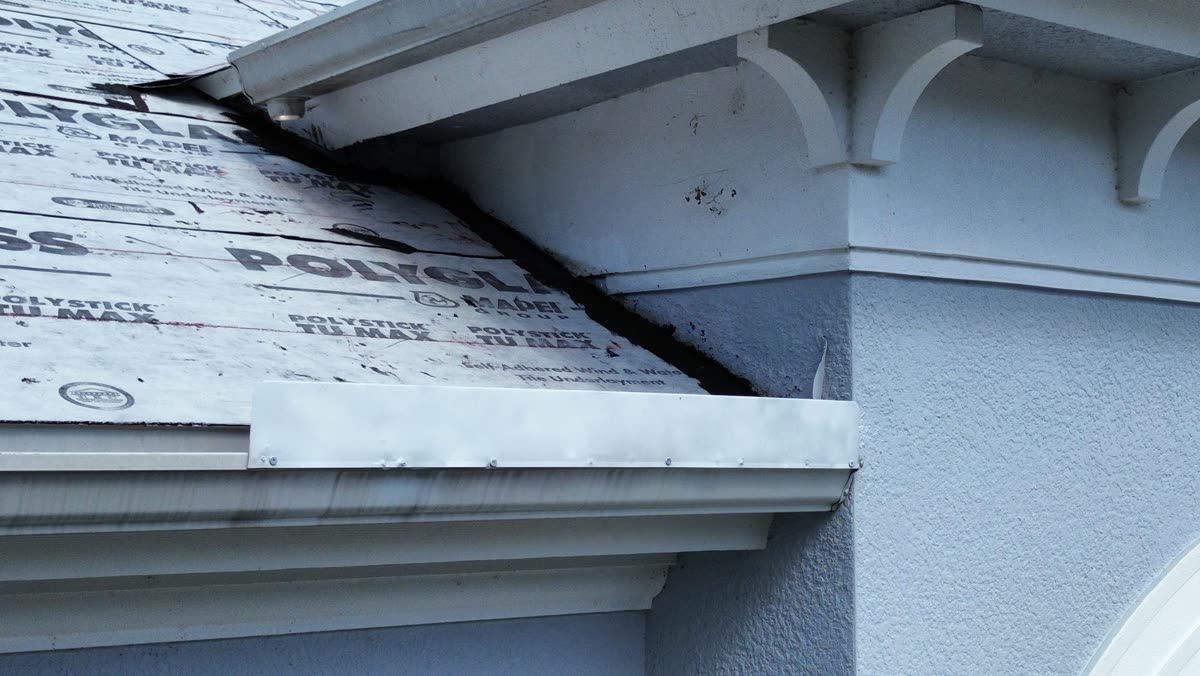
The other shortcut is what's sometimes called topical flashing — a repair applied over or against the surface at a transition, instead of a proper flashing installation integrated into the roofing system underneath. It's fast and cheap, and it's extremely inferior: it doesn't hold up the way flashing tied into the underlayment and wall does, and it tends to fail at exactly the transitions it was meant to protect.
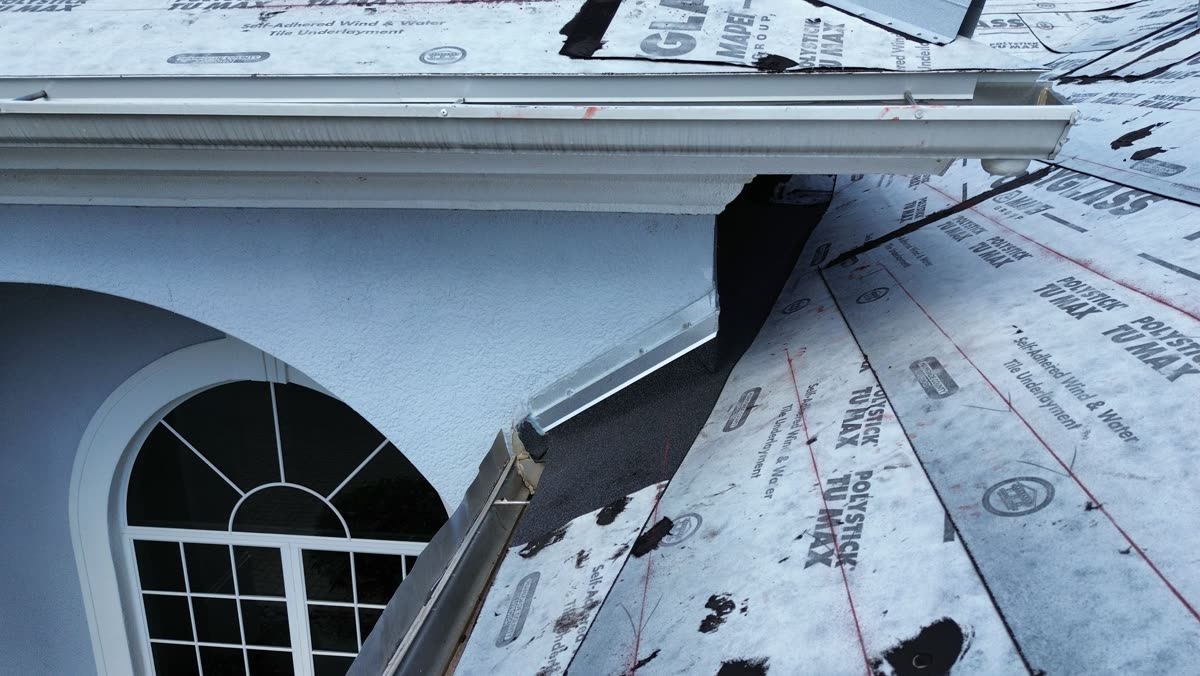
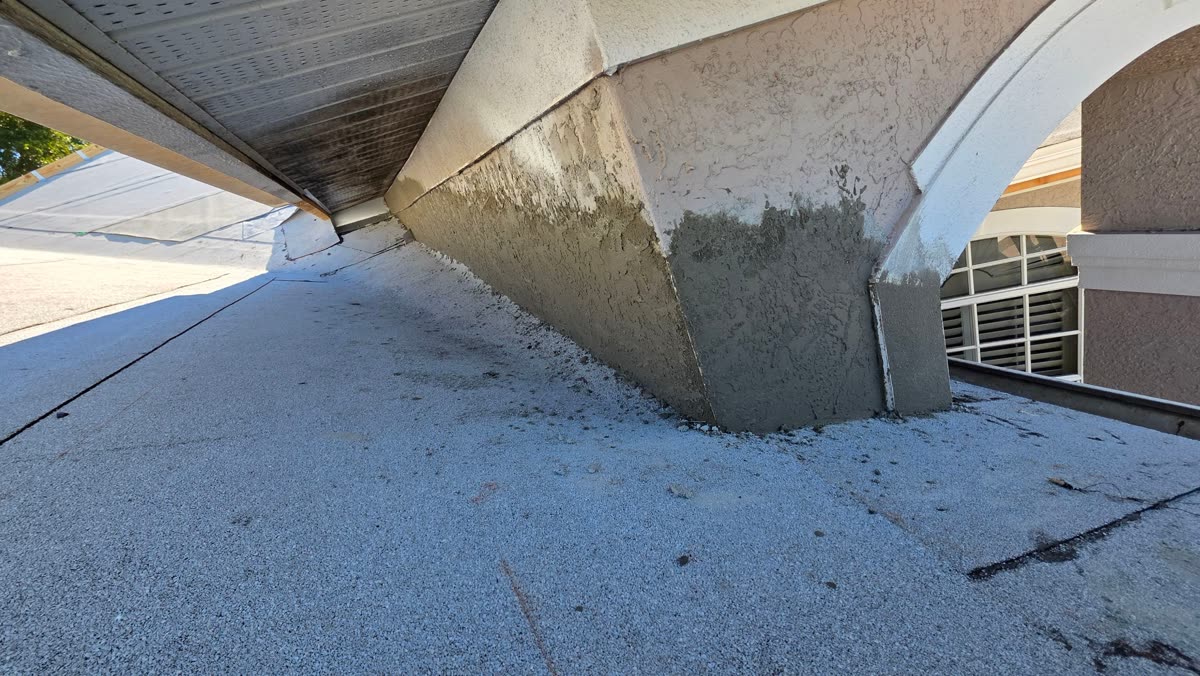
Here's what it looks like done right — flashing genuinely replaced and properly tied into the wall, with the stucco finished around it instead of just caulked over the old material:
When you review a bid, look for flashing to be a real line item — not buried, not vague. Ask specifically: are you replacing the flashing at the walls, valleys, and penetrations, or reusing what's there? The answer tells you whether you're buying a roof that's actually new, or just a new covering over the same old leak points.